

For most of the summer, the field is unavailable.
Corn is high.
Wheat covers the ground.
Soybeans hide the surface.
Even with permission, there is very little reason to walk between growing crops swinging a detector.
Then the combine arrives.
A few days later, the landscape changes completely.
The crop is gone.
Long sightlines return.
Old tracks become visible.
Patches of darker soil appear.
And for a metal detectorist, one of the shortest and most interesting windows of the year begins.
After harvest, farmland opens again.
Sometimes only for a few days.
The farmer may plow almost immediately.
Seed another crop.
Apply fertilizer.
Or decide the field is too wet to enter.
That makes autumn field detecting fundamentally different from a weekend at the beach or park.
The opportunity is not simply seasonal.
It depends on agriculture.
And the best detectorists learn to work around the field rather than expecting the field to work around them.
The first rule is not detecting. It is timing.
A farmer does not finish harvest so detectorists can enter the field.
That sounds obvious, but it explains many of the problems people encounter with farm permissions.
Harvest may finish on Monday.
Tillage begins Tuesday.
Planting may follow almost immediately.
Or heavy rain may make the ground unsuitable for traffic.
In one detectorist discussion, a UK hunter described receiving permission specifically in the short period between harvesting and sowing. Another October discussion began with exactly the familiar situation: a large cornfield had just been harvested, and the detectorist wanted to approach the farmer before the next field operation began. Reddit
The lesson is simple:
“I have permission for this field” does not necessarily mean “I can enter whenever I want.”
Check again.
Ask whether cultivation or drilling is planned.
Ask where you can park.
If the ground is extremely wet, ask whether the owner would prefer you return later.
Those small conversations are often what turn one-day access into a permission that lasts for years.
Why harvest can transform a familiar permission
The obvious benefit is accessibility.
A detector coil that could not practically move through standing crops can now cover the ground.
But the more interesting change often comes next.
Tillage.
A plow, cultivator or disc does not leave the upper soil exactly where it was.
USDA tillage guidance describes moldboard plowing as an operation that inverts and mixes soil, while discs, chisel plows and field cultivators mix soil to varying degrees. Moldboard plows commonly work several inches deep. efotg.sc.egov.usda.gov
For detectorists, that matters.
A target that was previously:
too deep,
on an awkward angle,
masked by nearby iron,
or simply outside the part of the field you searched carefully
can be repositioned within the disturbed plow layer.
That is why an old permission is not necessarily finished simply because you searched it last year.
A field can produce “new” finds without gaining any new history
One of the most repeated pieces of field-detecting advice is:
go back after it is plowed again.
A 2024 discussion asked whether there was any point in returning to a field that had already been detected before its latest plowing.
The overwhelming answer was yes.
Detectorists described artifacts and coins appearing after repeated cultivation, with one user noting fields where new Roman coins seem to turn up after subsequent plowing. Reddit
That does not mean a plow magically raises every deep target to the surface.
It means the searchable layer has changed.
Imagine a coin sitting edge-on.
Or just beyond your detector's comfortable range.
Cultivation shifts the surrounding soil.
Next season the same coin may be:
shallower,
flatter,
or simply in a position that gives a better response.
Nothing about the coin changed.
Your relationship to it did.
But freshly plowed does not always mean easier detecting
This is where the romantic image of autumn field hunting meets reality.
A beautifully turned field can be horrible to swing over.
Deep furrows.
Large clods.
Uneven coil height.
Loose soil.
Plant residue.
Your coil may be six inches above the lowest part of the ground even when it appears to be touching the tops of the furrows.
That costs detection depth.
One detectorist who returned to a freshly chisel-plowed permission said signals that had previously been strong became much less repeatable after cultivation. Large or very shallow targets were still obvious, while other objects became harder to identify from the rough surface. Friendly Metal Detecting Forum
So:
fresh plowing can expose new targets while simultaneously making those targets harder to detect.
Both things can be true.
Sometimes the best moment is not immediately behind the tractor.
A little rain can settle loose soil.
Another field operation may level the surface.
Conditions can become easier to swing while the plow layer is still open.
This is why successful field detecting involves returning under different conditions instead of trying to declare a site “finished.”
Harvested, plowed and rolled are three different fields
Think about the same permission at three stages.
Immediately after harvest
Stubble remains.
The surface may be relatively firm.
Targets have not recently been redistributed by tillage.
This can be a very comfortable time to detect.
After plowing
The soil has changed.
Previously inaccessible targets may move within the disturbed layer.
But the surface can be rough and difficult.
After cultivation or rolling
The ground can become flatter.
Coil control improves.
Signals may become easier to investigate.
Same location.
Different hunt.
That is why notes about field condition can become almost as useful as notes about finds.
Do not measure a farm field by its size
A 200-acre permission sounds extraordinary.
It can also be completely overwhelming.
In June 2026, a beginner posted about receiving permission to search more than 200 acres of farmland with historical connections to several conflicts.
The obvious problem appeared immediately:
Where do you even begin? Reddit
The answer should almost never be:
walk randomly until the detector beeps.
A field is not equally interesting everywhere.
Your first job is to shrink it.
Search the human landscape that existed before the current crop
The modern field may look like one giant rectangle.
Historically, it may have contained:
several smaller fields;
a house;
a barn;
a footpath;
a road;
a gate;
a well;
a market area;
a former boundary;
workers' gathering points.
Agricultural consolidation can erase visible evidence of those features.
Metal does not necessarily disappear with them.
Before searching a large permission, study:
historical maps;
old aerial imagery;
local records;
previous field boundaries;
historic roads;
nearby settlement locations.
Then walk with a hypothesis.
You are not searching 40 acres of soil.
You may actually be searching:
the 80-yard section where a former lane crossed an old field boundary.
That is a much more manageable problem.
Field edges deserve more attention than they usually receive
People naturally walk boundaries.
Machines turn there.
Old gates may have existed there.
Former hedges can mark much older divisions than today's crop lines.
When you first enter a permission, look at:
corners;
gaps;
gateways;
changes in hedge lines;
old trees;
raised banks;
track entrances.
These areas can sometimes tell a story the middle of the field does not.
But do not assume every old hedge equals ancient activity.
Use boundaries as clues.
Then let the targets confirm whether the clue matters.
Old paths can be more interesting than the destination
Imagine a farmhouse existed on one side of a field.
A village stood on the other.
People did not teleport between them.
Somewhere there may have been a route.
That route may now be completely invisible under modern agriculture.
Historical maps can reveal:
footpaths;
cart tracks;
lanes;
former roads.
If people used the route repeatedly, objects could have been dropped along it.
Again, the useful unit is not:
the whole field.
It is:
where people repeatedly moved through the field.
A good target line can appear before a good target
One of the easiest mistakes is judging a section entirely by value.
You find:
button.
Lead.
Piece of brass.
Another button.
Old iron.
No coin.
Time to leave?
Maybe not.
You may have found an activity zone.
A recent September 2026 post from a first-time detectorist describes a productive hunt on long-worked farmland, while experienced commenters emphasized that fields can contain enormous quantities of metal and that large iron can produce convincing signals. Reddit
Another active detectorist discussing farm permissions in October said that on farmland they tend to dig virtually everything rather than relying only on the high tones they might prioritize in a playground. Reddit
That makes sense.
A historic field is not a modern coin-shooting site.
Interesting targets can include:
buttons;
buckles;
lead objects;
small brass;
tokens;
coins;
agricultural hardware;
and a spectacular amount of iron.
The context matters.
Target ID becomes less trustworthy in messy farmland
Farm fields can contain generations of contamination.
Wire.
Nails.
Machinery fragments.
Foil.
Aluminum.
Shotgun cartridges.
Lead.
Modern trash.
Old iron.
A perfect high-number signal is pleasant.
But if you only dig beautiful textbook signals, you may be filtering the history through your detector's idea of what deserves attention.
The detectorist with the 200-acre Virginia permission received one repeated piece of advice:
dig consistent signals, especially while learning the site. Reddit
That does not mean excavating every tiny iron grunt over hundreds of acres.
It means learning what the field is telling you before applying extremely aggressive discrimination.
A button is not required to sound like a silver quarter.
Autumn moisture can help — until it becomes the reason to stay home
Dry summer ground can become hard.
Autumn rain often makes recovery easier.
But farm fields introduce a responsibility that parks do not.
The soil is someone's livelihood.
Agricultural extension guidance consistently warns that wet soils are vulnerable to rutting and structural damage. The University of Minnesota notes that saturated autumn fields have high compaction risk, while Penn State warns that traffic on very wet agricultural soils can create rutting and damage that is difficult to repair. Університет Міннесоти
A detectorist on foot is obviously not a loaded combine.
But the principle matters.
If you arrive and the field is a mud bath:
do not drive onto it.
Do not create deep tracks.
Do not assume permission means the farmer wants you walking everywhere regardless of conditions.
One older detectorist discussion describes exactly how quickly a permission can become awkward when someone drove onto a newly worked wet field and left tire marks. Reddit
Sometimes the best autumn field decision is:
come back next weekend.
Keeping the permission is worth more than one afternoon of detecting.
Farmers remember how you leave the field
Good permissions are relationships.
A particularly useful October discussion included a farmer responding directly to a detectorist asking how to approach landowners.
The farmer liked the suggestion that detectorists remove trash and said they may also be interested in seeing historical finds from their own property.
Another detectorist described how showing the landowner buckets of recovered metal trash helped turn a hesitant first visit into years of continued permission. Reddit
This is one of the simplest ways to become the person invited back after next year's harvest.
Do not leave:
open holes;
sharp scrap;
trash piles;
damaged access points.
Show the owner what you found if that is part of your agreement.
Ask before returning.
Respect their work schedule.
The best farm permission is not necessarily the field where you find the best coin.
It is the one you are allowed to learn over several seasons.
Plowing makes repeat visits more important than speed
Modern detecting culture sometimes creates the feeling that you have to “clean out” a site before someone else does.
Farmland works differently.
Cultivation can change target positions season after season.
That makes careful repeat coverage more useful than racing randomly across the property.
If a section produces older targets:
record it.
Return after the next cultivation.
Search at another angle.
Change coil direction.
A target partly masked by iron from north-to-south may respond differently east-to-west.
And the following year the plow may change the relationship again.
A field can remain interesting long after your first good hunt.
Grid the productive area, not necessarily the whole farm
Systematic coverage matters, particularly once you identify a promising section.
Guidance from the Suffolk archaeological service recommends systematic detecting on cultivated land and maintaining records of conditions and find locations. heritage.suffolk.gov.uk
For a hobby detectorist, this does not need to become an archaeological survey.
You can keep it simple.
Suppose five older targets appear within 50 yards of one another.
Stop wandering.
Walk parallel passes.
Then cross them at 90 degrees.
Record where the strongest concentration occurs.
A grid is useful when the ground has earned the effort.
Gridding 200 empty acres from the first minute is a very good way to stop enjoying metal detecting.
Record location before cleaning the interesting find
There is a special temptation with field finds.
You see the edge of a coin.
Or an old buckle.
Immediately:
pick it up;
rub soil away;
photograph it in your hand;
continue hunting.
For potentially significant artifacts, location information may ultimately matter more historically than the object alone.
UK guidance for responsible detecting, for example, recommends recording precise find locations and reporting qualifying archaeological finds through the appropriate system. It also advises detecting within already disturbed plow soil rather than digging into intact archaeological deposits. dorsetcouncil.gov.uk
Rules differ greatly between countries and even between properties.
So before entering any field, know:
who owns it;
what your agreement covers;
whether the land has archaeological or environmental restrictions;
what types of finds must be reported locally.
Landowner permission is the start of the question.
Not always the end of it.
The harvest window can disappear overnight
There is something particularly satisfying about autumn farmland.
The landscape looks open.
Cool air.
No summer heat.
Freshly exposed soil.
A whole field that was inaccessible a week ago is suddenly available.
That can make detectorists act as if the opportunity will last for months.
Often it does not.
The farmer may seed winter wheat.
Heavy rain may arrive.
Tillage may begin.
The property owner may need access for another job.
That is why communication matters more than elaborate planning.
When you hear:
“The field is harvested. You can go this weekend.”
Go that weekend if you can.
Not because autumn contains magical detecting conditions.
Because agriculture runs on its own schedule.
Carry less once you leave the vehicle
A long field hunt has a different gear problem from a park hunt.
You might need:
water;
food;
rain layer;
spare batteries;
gloves;
first aid;
backup accessories.
But you do not need all of those items hanging from your waist every time you dig a signal.
A practical system separates transport gear from working gear.
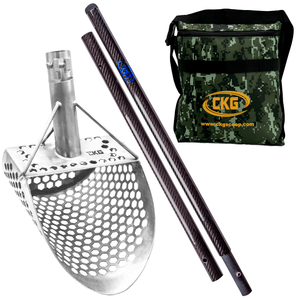
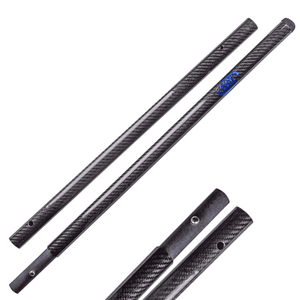
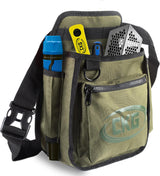
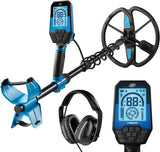
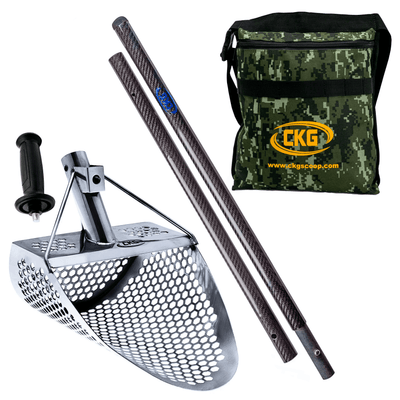
CKG's current field-gear guidance recommends using the backpack as a base while keeping only the detector, shovel, pinpointer and finds pouch active during the hunt. ckgscoop
That makes even more sense in autumn fields where you may walk several miles over rough ground.
A pinpointer earns its place very quickly in plowed soil
A target that sounded simple from the surface can become surprisingly annoying once disturbed soil breaks apart.
Coin in the sidewall.
Small brass in loose dirt.
Tiny button hidden inside a clod.
Now the large detector keeps saying:
somewhere here.
A pinpointer turns that into:
right here.
In the 2026 discussion about the first hunt on 200 acres of farmland, one of the earliest recommendations was straightforward: get a pinpointer because of the efficiency it adds during repeated target recovery. Reddit
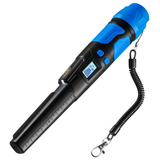
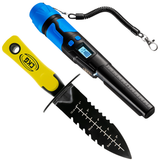
The CKG Metal Detector Pinpointer 360° is designed around that last stage of recovery, detecting around the probe to help locate targets in sidewalls and loose soil rather than forcing you to repeatedly enlarge the hole. The current CKG Essential Kit pairs it with a compact digging shovel for field use. ckgscoop
That is exactly the kind of equipment that matters after target number 40.
Not because the first recovery was difficult.
Because repeated inefficient recoveries consume an entire afternoon.
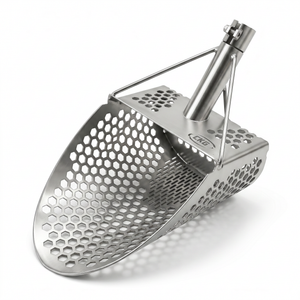
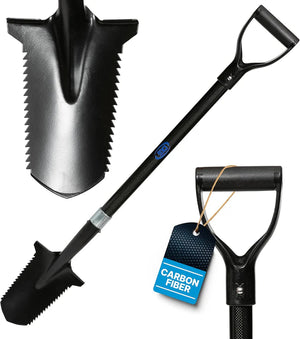
Use the shovel for the field, not the park
Different ground deserves different recovery tools.
For manicured grass:
small neat plug.
For cultivated farmland where digging is permitted:
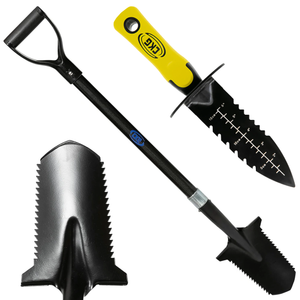
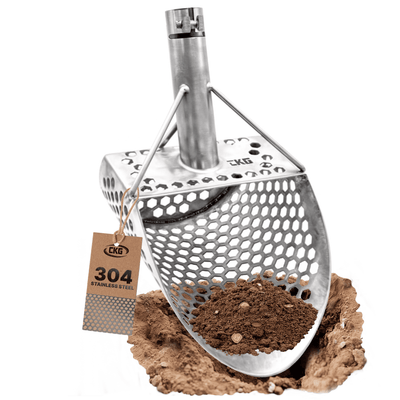
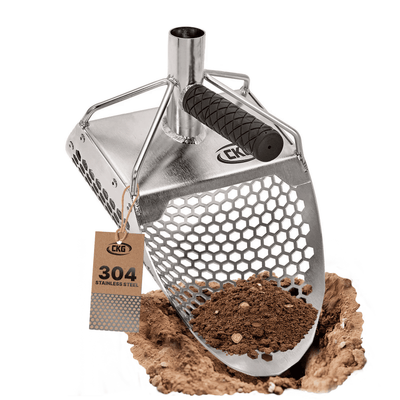
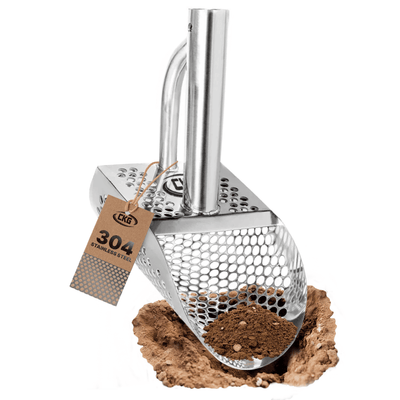
a field shovel may be significantly more efficient.
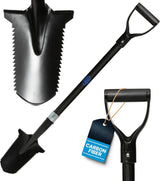
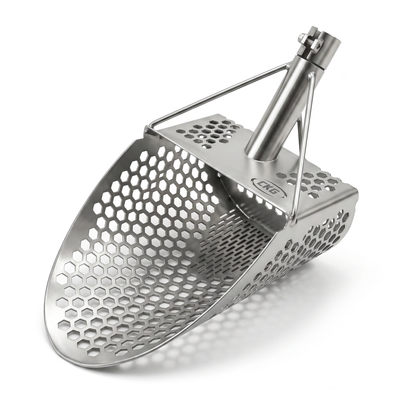
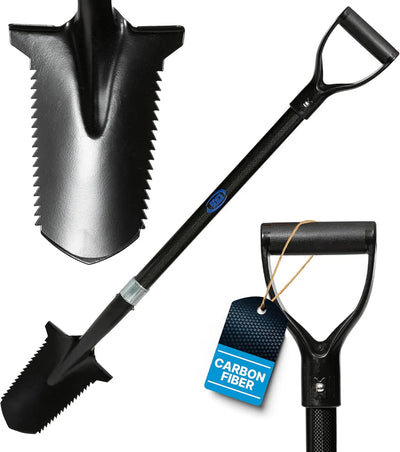
CKG's own recovery guidance makes the same distinction: a full shovel makes sense on a farm field or deeper target, while a compact hand digger is more appropriate when controlled recovery in turf or confined ground matters. ckgscoop
Again, follow the landowner's preferences.
If the field has already been worked, expectations may be very different from pasture or grass.
Never assume.
There is an underrated benefit to hunting the same permission for years
You stop seeing only finds.
You start seeing patterns.
Year one:
a few buttons.
Year two after plowing:
another coin close by.
Year three:
a buckle thirty yards farther uphill.
Now perhaps you are not looking at random drops.
Maybe an old path crossed there.
Maybe an activity area existed nearby.
That changes your research.
You return to maps.
Search the adjacent section.
Ask the farmer what they know about old buildings.
Good field detecting becomes a conversation between:
research,
ground conditions,
find distribution,
and repeated observation.
That is more interesting than simply collecting target IDs.
What I would do on the first hunt after harvest
I would resist the urge to grid immediately.
First, I would walk the field.
Look at:
old entrances;
higher ground;
historic boundaries;
trackways;
changes in soil color;
areas identified in historical research.
Then I would make several broad detecting passes.
The first objective is not maximum coverage.
It is finding the part of the field worth maximum coverage.
If signals remain almost entirely modern and random:
keep sampling.
If older buttons, lead and coins begin clustering:
slow down.
Now grid.
And when you leave, note exactly what the ground was like:
harvested stubble;
freshly plowed;
rolled;
dry;
wet;
rough.
Next year's comparison becomes much more useful.
Autumn does not make a bad field good
This is worth saying.
A field is not productive simply because it is old-looking and golden in October.
If nothing historically happened there, cultivation will not invent lost coins.
The strongest fields tend to combine two things:
access
and
history.
Harvest gives you access.
Research gives you the second half.
That is why one freshly harvested field can produce almost nothing but modern machinery fragments while another nearby field produces centuries of mixed objects.
The crop is not the reason.
The people who used the land before the crop are.
Final Thoughts
There is a particular excitement when a familiar field is finally harvested.
For months, you have driven past it.
The crop hid everything.
Then one morning it is open again.
It is tempting to think of this as a completely new detecting site.
It is not.
Something more interesting has happened.
You have been given another version of the same site.
The surface changed.
The plow layer may change next.
Targets may move within it.
Soil moisture changes.
Access changes.
And information gathered last year suddenly becomes useful again.
That is why autumn farm-field detecting rewards patience.
Do not rush to cover every acre.
Find the old routes.
Watch target concentrations.
Return after cultivation.
Search productive sections from another direction.
Record what you find.
Keep the farmer informed.
Remove the trash.
And when wet ground or the next crop closes the window, leave it alone.
Because the real advantage of a good field permission is not that you get one autumn hunt.
It is that after the next harvest, the field may give you another chance to read the same history from a slightly different layer.